Drop Waists and Cummerbunds, Styled for Curves
- Curve File Editorial Team
- 21 Oct, 2026
Fall 2026 did something odd to the waist. It moved it in two directions at once.
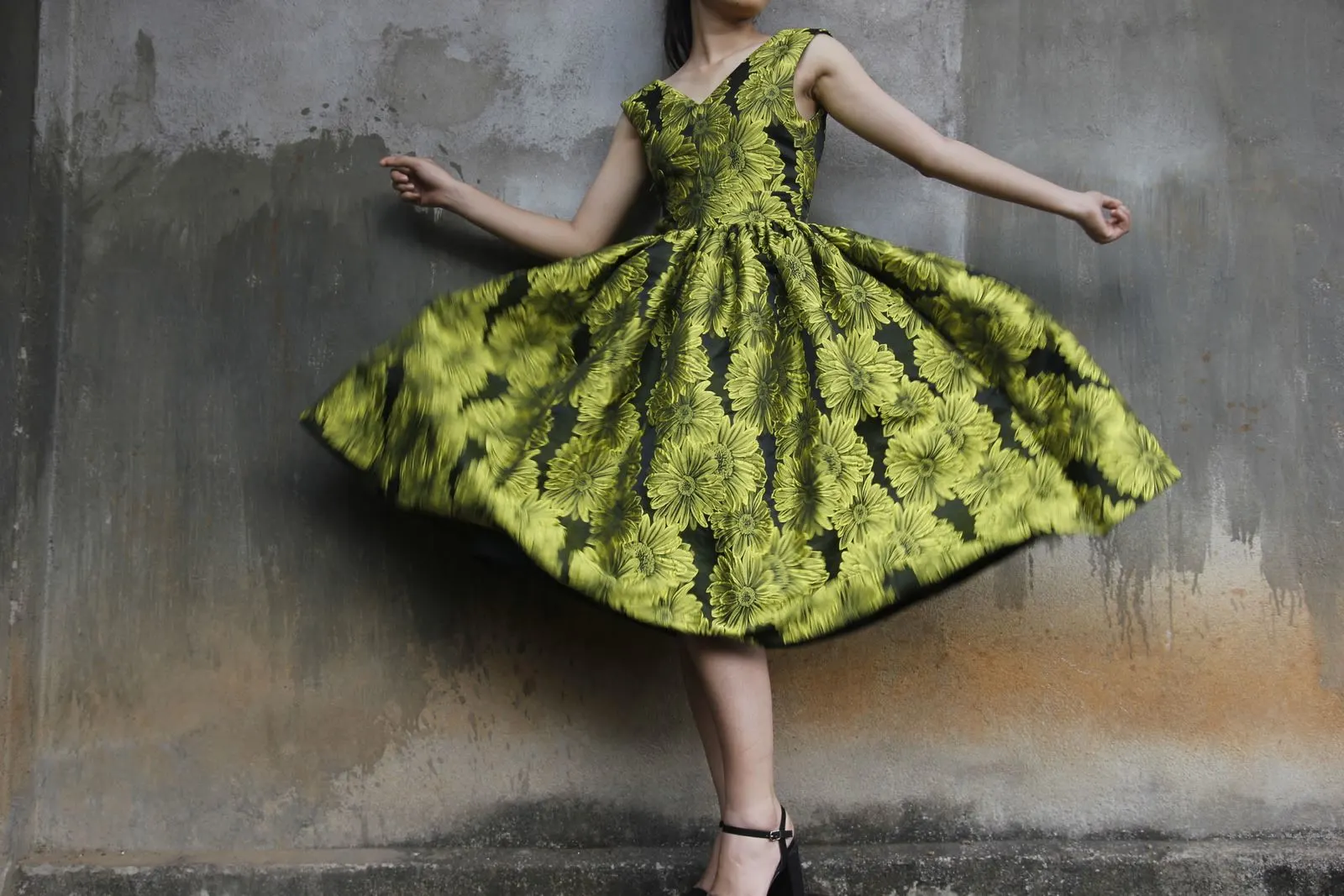
On one side, Harper’s Bazaar’s October 20 trend report calls it “waistmaxxing”: cummerbunds all over the runway at Polo Ralph Lauren, Celine, Etro and Dries Van Noten, where Julian Klausner brought back the house’s interest in the waist with statement versions. On the other, Simone Rocha, Tory Burch and Matthieu Blazy at Chanel “dropped waistlines on dresses lower than we’ve seen before,” in the magazine’s words. One trend cinches. The other slides the seam down toward the hip.
Most trend coverage stops at “here’s the runway.” I want to talk about what happens when you put these on a body with a real bust, real hips and a stomach that has opinions. I’m not going to tell you which one is “flattering.” I’m going to tell you where each one puts the eye, and you decide whether that’s where you want it.
First, find your two waists
Everybody has at least two places a garment can call “the waist,” and with these trends you need to know both.
Your natural waist is the narrowest point of your torso, usually a few inches above your belly button. Your low waist, the one drop-waist dresses are cut for, sits around the top of your hip bone or lower. Stand in front of a mirror with a soft tape and measure both circumferences, then measure the distance down between them. Write all three numbers down in inches or centimeters, whichever the brands you shop use.
That vertical distance is the number most people never take. It decides whether a drop-waist seam lands on your hip or halfway down your thigh, and whether a cummerbund sits on your waist or rides up under your bust.
If you carry your shape in your bust
A wide cummerbund can be tricky when your bust sits close to your natural waist. Harper’s notes that some runway cummerbunds were “quite traditional” and others came in unexpected colors or embellished, and the deep, stiff ones are the ones that can crowd a short torso.
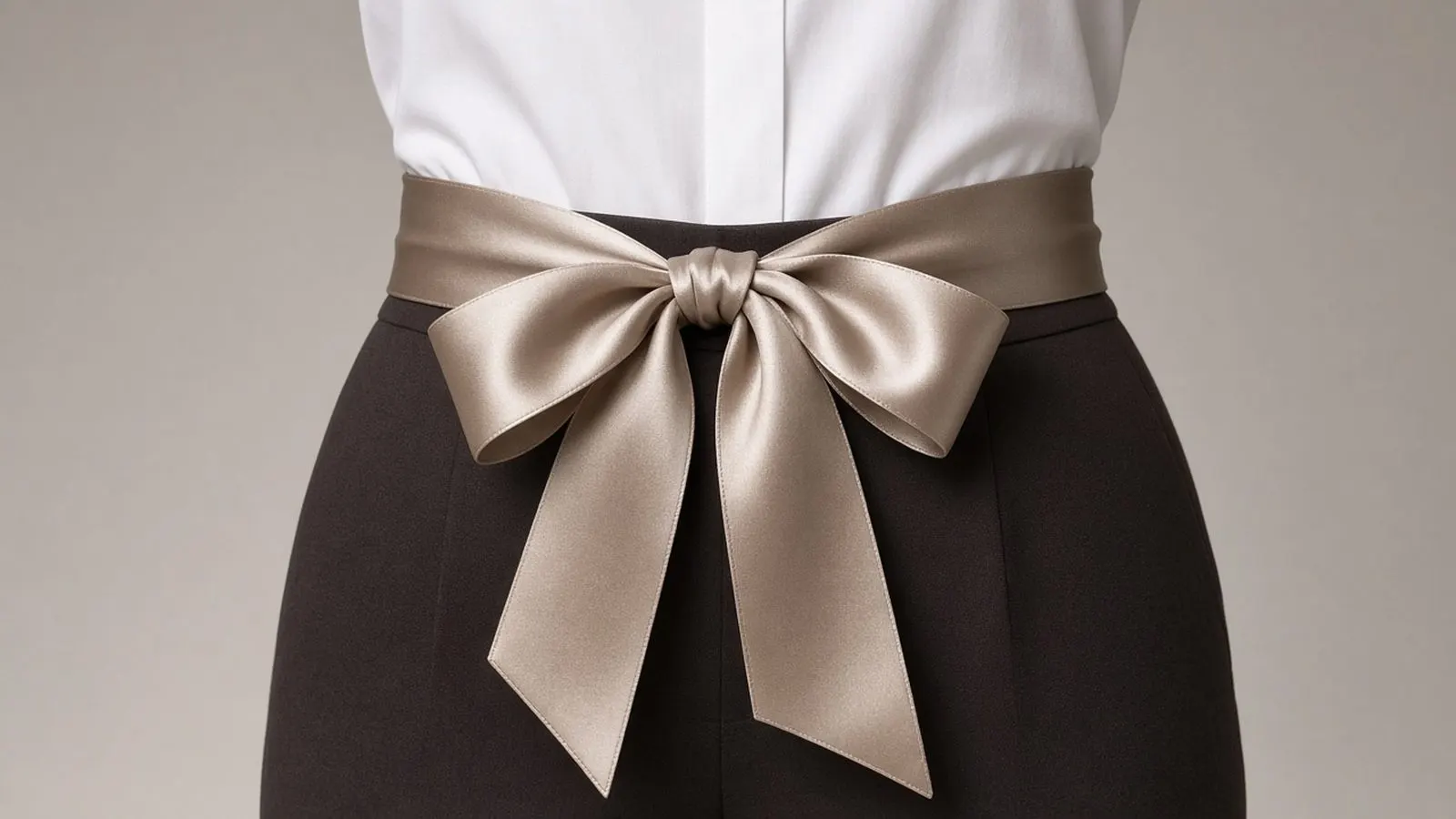
Two fixes. Go narrower, so there’s visible space between the band and the underside of your bust. Or try the softer version Harper’s suggests: a silky opera scarf tied at the waist over black trousers and a blue button-down. A scarf compresses to whatever width you tie it, and you can sit it slightly lower than your true waist so it doesn’t fight your bra line. The Helsa silky opera scarf in that story was listed at $178 at Revolve (Oct 2026), but any long silk or satin scarf you already own does the same job.
Drop waists can actually work well here. Moving the seam down shifts the eye away from the bust and gives the bodice length to drape. Just check that the bodice is cut with enough room across the chest. A fitted, low-seamed bodice that’s tight at the bust will pull into horizontal lines right across your middle.
If you carry your shape in your hips
This is where the drop waist needs the most care, and where most of the trend pieces will be unkind to you off the rack.
A seam that lands right on the widest part of your hips draws a line exactly there. That’s not wrong. It’s just a choice. If you’d rather not, look for a drop waist that sits a little above your widest point, or one with a skirt cut on the bias or with soft pleats that start at the seam, so the fabric skims rather than grips.
Harper’s styling note for drop waists is a classic pump with a pointed or almond toe to “streamline” the look. Fine, but I’d put more weight on hem length. A longer skirt below a dropped seam balances the proportion better than any shoe.
Cummerbunds are often the easier trend for a pear shape. A band at your natural waist marks the narrowest point and lets trousers or a skirt fall from there. Try it over a tuxedo shirt or a silky dress, which Harper’s also suggests. The Trafalgar silk cummerbund in its edit was listed at $90 at trafalgarstore.com, which is about as accessible as this trend gets new (Oct 2026).
If you carry your shape in your middle
I’ll be direct, because this is the situation nobody writes about. If your stomach is the fullest part of your torso, a stiff cummerbund pressed across it is going to be uncomfortable after about an hour, and comfort matters.
So skip the stiff band. Look at Róhe’s double-waist pants, which Harper’s writer says she “can’t stop wearing.” They give you the waist detail built into the trouser, two bands stacked, so the interest sits at the top of the pants instead of squeezing your middle. They’re expensive, listed at $940 at LN-CC in that story (Oct 2026). The idea is the useful part. A high-rise trouser with a wide, flat waistband and a belt in a contrasting color gets you close.
Drop waists can be lovely on this shape if the bodice is cut straight and not fitted. A loose, straight bodice dropping to a low seam hangs past the stomach instead of tracing it. A fitted one does the opposite.
If you’re short-waisted or long-waisted
Back to that vertical measurement between your two waists.
If it’s short, a drop waist can land lower on your body than the designer intended, because your hips start sooner. Look for petite or “short” fits in dresses, or plan to have the seam raised. A tailor can sometimes do this on a simple dress, less easily on one with a pleated skirt. Our guide to what a tailor can change in plus-size garments covers which seams are worth paying to move.
If it’s long, both trends get easier. You have room for a cummerbund without crowding your bust, and a drop waist won’t sink past your hips.
The mistake I’d avoid
Buying the trend piece before checking the size chart’s torso measurements. Most size charts list bust, waist and hip and nothing about vertical length. With drop waists, the vertical length is the whole garment. If a brand doesn’t list the waist seam position or the bodice length, email them or read reviews from people who mention their height. Our guide to reading a size chart when you’re between sizes has more on what to ask.
My honest preference: if you’re going to try one of these trends this season, start with the scarf at the waist. It costs nothing if you own a scarf, it adjusts to any body, and you’ll know within a day if you like attention at your waist before you spend $900 finding out.