Dress Codes and Formalwear in Larger Sizes
- Curve File Editorial Team
- 03 Aug, 2026
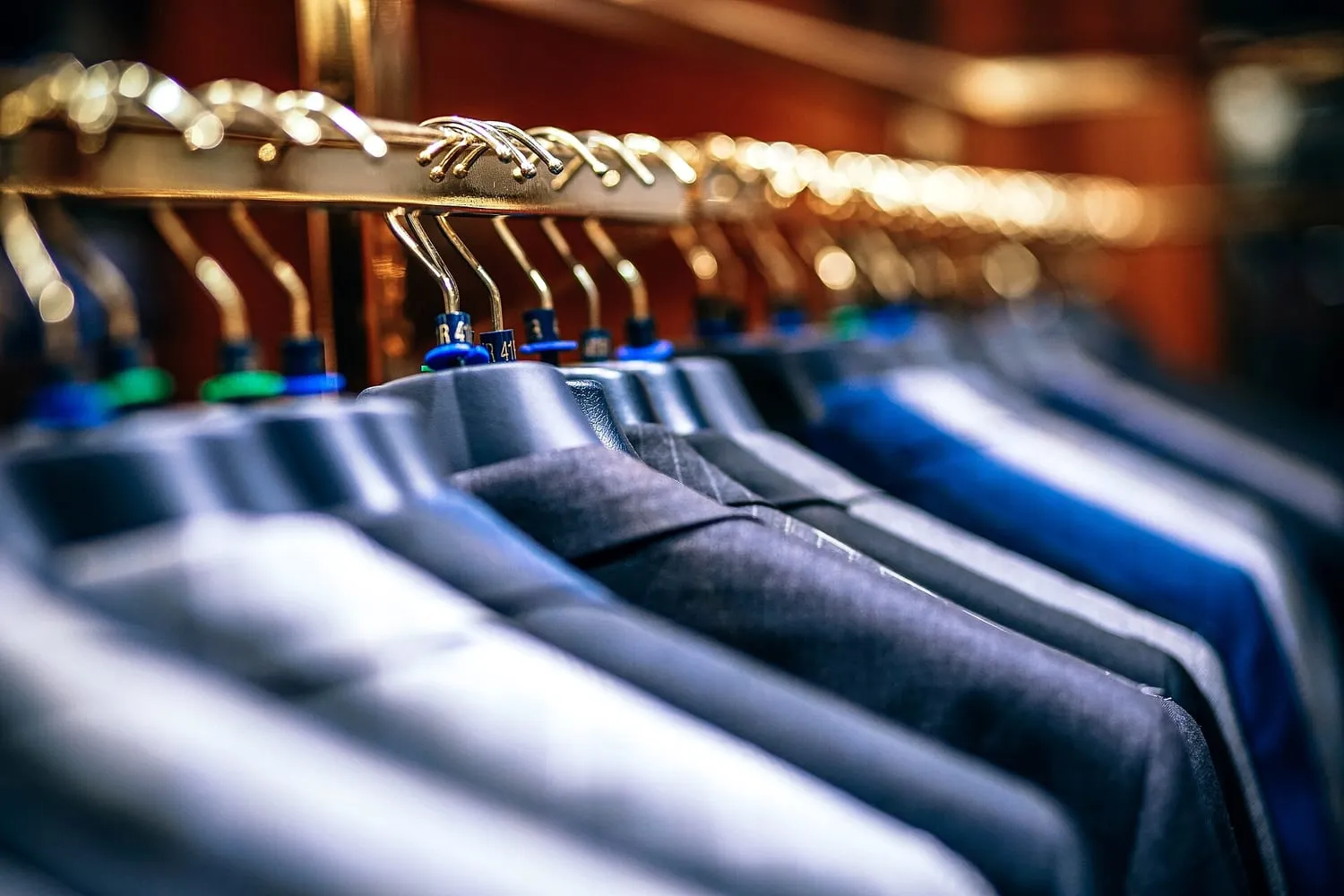
Dress codes are instructions about the level of formality, not about a specific garment, and the words used rarely mean what a plain reading suggests. “Semi-formal” is dressier than “business casual”, and “formal” in an invitation often means something more specific again. With structured clothing, the ambiguity matters more than usual, because a garment that is nearly right for the code is often harder to adapt than one that is clearly wrong.
There is a second problem that anyone buying in larger sizes meets immediately: structured formalwear is the least forgiving category to grade. A jacket has to hold a line, and the pieces that hold it cannot simply be scaled.
What the codes actually ask for
The codes are conventional rather than legal, and they vary by country and by occasion, but the working meanings are reasonably stable.
- Business casual means a collared shirt or a fine knit, with tailored trousers or a skirt, and no tie required. A jacket is optional. Denim is usually out.
- Business formal means a suit, with a jacket and a matching lower half, and a tie for most situations. The jacket does the work.
- Semi-formal, in the evening, means a dark suit or a cocktail-length dress; for a man a tie and often a dark suit, for anyone a step below the black-tie level.
- Formal or black tie conventionally means a dinner jacket or an evening gown. A long gown is the safest reading of an evening formal invitation.
- White tie is the most specific code and the most restrictive: a tailcoat, a white bow tie, and full evening dress.
Where an invitation lists two codes, treat the higher one as the safe reading. Where it lists one and gives an example, the example is the instruction.
Why structured garments are graded least carefully
A soft garment fits within a range, because the fabric can be stretched by the body and will settle. A structured garment fits within a much narrower range, because it is holding a shape rather than following one.
Structured garments are also the most expensive to grade properly. A jacket has a canvas or interfacing inside, shoulder pads, a lining and a collar, and every one of those pieces has to be graded along with the outer shell. The dart positions, the position of the shoulder point and the relationship between the chest and the waist all have to be resolved separately for each size.
The cheaper route is to grade the outer shell and leave the innards as they are, which is why a jacket can be the right size across the chest and still feel wrong: the shoulder pad is placed for a smaller frame, the dart points to the wrong place, or the collar sits away from the neck. This is not something you can fix by sizing up.
The parts that carry the shape
Knowing which internal pieces exist tells you what can and cannot be changed later.
Canvas and interfacing. These give a jacket its roll and its front. A full canvas is stitched in by hand and follows the body closely. A fused front is glued, which is faster and cheaper and less forgiving of pressing and heat. Neither can easily be added or removed by a tailor.
Shoulder pads. These set the shoulder line. Changing their size changes the whole proportion of the jacket, and it is one of the more involved alterations, because the sleeve head has to come out.
Darts and seaming. The position of a bust dart or a princess seam decides where the shape is taken in and released. Moving a dart a small distance is a normal alteration; moving it a long way changes the balance of the front.
The lining. A lined garment is easier to put on and off, and a lining that is too tight can make a jacket that fits feel small. A lining can often be let out on its own.
Leave time and money for alterations
It is reasonable to assume every structured garment will need at least one alteration. That is true of ready-to-wear generally, and more so where the range of sizes is thin.
Time matters as much as money. Alterations on a jacket can take more than one fitting, and a tailor’s queue is longest in the weeks before a formal season. If an event is three weeks away, the garment needed to be bought before the conversation started. For anything other than a hem, allow several weeks.
Decide what is worth altering before you buy. Sleeve length, hem length, waist suppression and dart position are normal work. Shoulders, the collar and the overall chest balance are structural, and getting them wrong is a rebuild. If a garment needs the second category, it is the wrong garment.
Buying, renting or having it made
Each route suits a different situation.
Buying outright makes sense when you expect to wear the garment more than once, when your size is comfortably within the range, and when you have time for a fitting. It gives you a garment that fits your body rather than a size band.
Renting makes sense for a single occasion, particularly for a garment you would not otherwise wear again. The limitation is that the range is usually thinnest at the larger sizes, and the fit cannot be altered at all, since the garment has to go back.
Having a garment made for you, whether by a tailor or a made-to-measure service, solves the grading problem directly, because the pattern is drafted to your measurements. The trade is time, cost, and the need for fittings. It is often the most reliable route for a formal garment that has to be exactly right.
Accessories as a buffer
Accessories can carry some of the adjustment that the garment cannot.
A belt or braces can hold a trouser that is slightly loose at the waist, so long as the waistband itself is designed to take them. A waistcoat covers the point where a shirt meets a trouser and can disguise a waistband that sits imperfectly. A bow tie or a long tie can be adjusted freely, which matters when a collar is a little tight. A shawl or wrap over an evening dress solves an issue of coverage without changing the dress, and separates can be chosen to add or remove formality.
Accessories are not a substitute for a garment that fits. They are a way of absorbing small mismatches that no alteration would be sensible to chase.
When to walk away
Walk away when the shoulders are wrong, when the collar stands off the neck, or when the chest balance is wrong, because none of those can be altered economically. Walk away when the garment is on final sale, because the alteration budget needs a return route behind it. And walk away when the time to the event is shorter than the time a tailor needs, because a rushed alteration is worse than a garment that was chosen a size out.